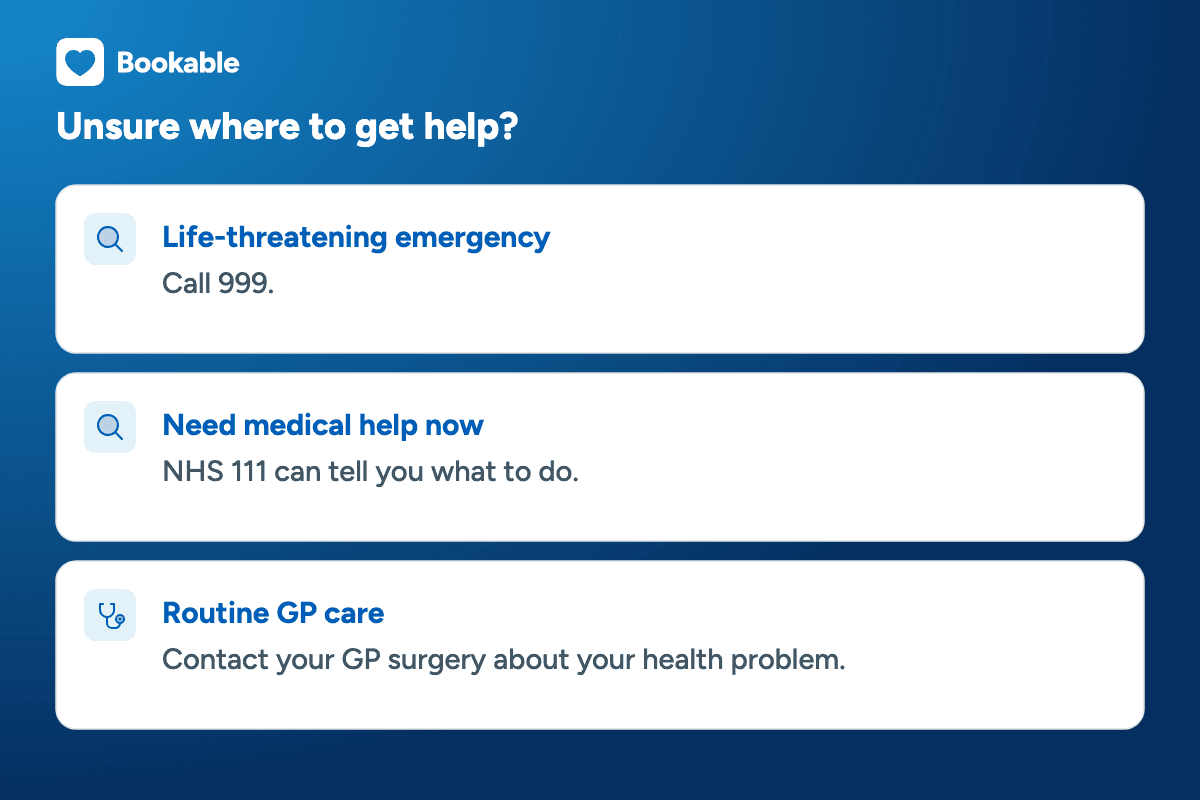
Call 999 for life-threatening emergencies and go to A&E for serious injuries. If you need help urgently but it is not an emergency, use NHS 111 online or call 111. For common illnesses, start with a pharmacy, and see your GP for anything that can wait.
In short:
- Call 999 for life-threatening emergencies, such as a stroke, heart attack or serious road accident.
- Go to A&E for serious injuries and life-threatening emergencies, but do not drive yourself.
- Use NHS 111 when you need help urgently and are not sure where to go.
- A pharmacy or urgent treatment centre can often help for common illnesses, aches and pains without a GP appointment.
Which NHS service should I use?
Choose the service that matches how serious and how urgent your problem is. Call 999 if someone's life is at risk. If you need help now but it is not life-threatening, use NHS 111 and they will tell you where to go. For everything else, a pharmacy or your GP surgery is usually the right place.
| Service | Use it for |
|---|---|
| ServiceLooking after yourself at home | Use it forMinor problems that are safe to look after at home. NHS 111 can tell you if yours fits this category |
| ServicePharmacy | Use it forAdvice and treatment for common illnesses, aches and pains |
| ServiceGP surgery | Use it forHealth problems that are not emergencies, including urgent appointments |
| ServiceNHS 111 online or call 111 | Use it forWhen you think you need medical help now and are not sure what to do |
| ServiceUrgent treatment centre | Use it forUrgent problems that are not life-threatening, like sprains or cuts |
| ServiceA&E | Use it forSerious injuries and life-threatening emergencies |
| Service999 | Use it forLife-threatening emergencies |
When should I call 999?
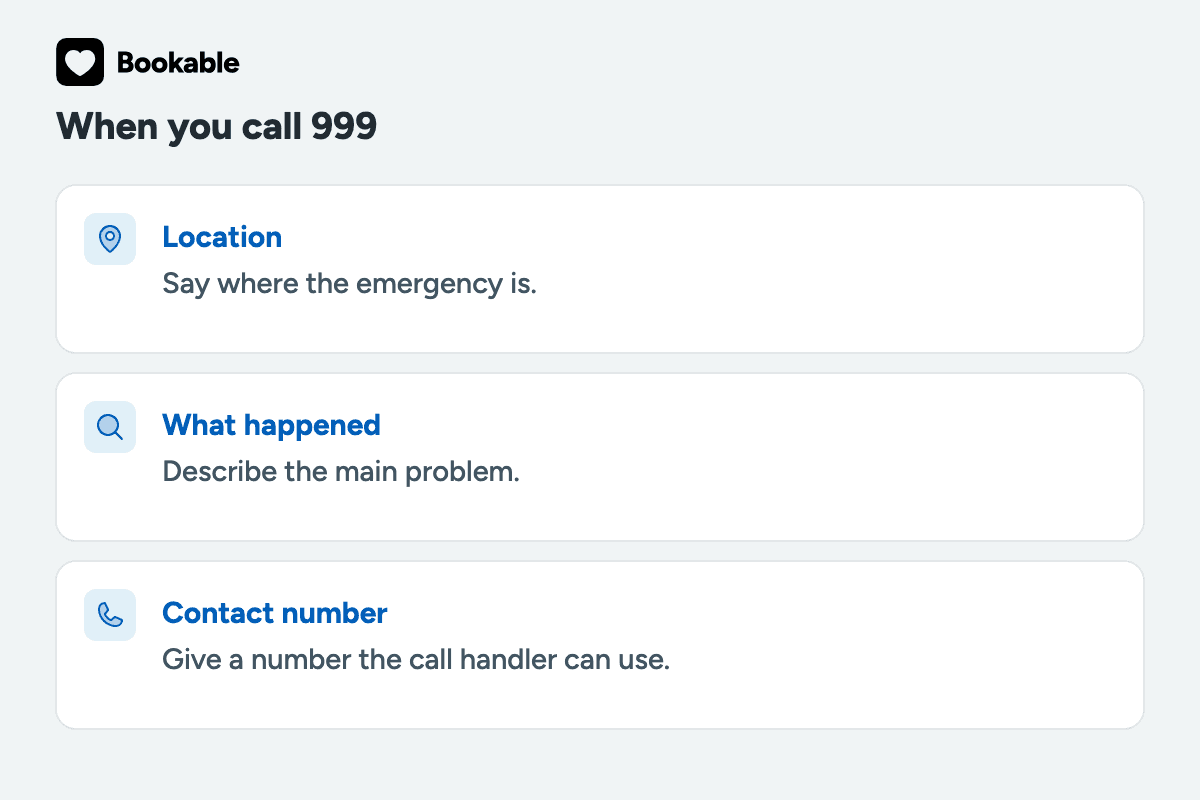
Call 999 for a life-threatening emergency. Examples include serious road traffic accidents, strokes and heart attacks. If someone has signs of a life-threatening illness, or has tried to end their life, call 999 straight away. Read more on the NHS page when to call 999 (opens in a new tab) or in our guide on when to call 999.
The call handler will ask if the patient is breathing, where you are, what has happened and for your phone number. An ambulance is not always sent. You may be told it is safe to get to A&E yourself or to be seen somewhere else.
Not sure if it's an emergency? Use 111.nhs.uk or call 111 for advice. If you think someone's life is at risk, call 999.
Should I go to A&E?
Go to A&E (accident and emergency) for serious injuries and life-threatening emergencies. Do not drive yourself. Ask someone to take you, or call 999 for an ambulance. Take any medicines you are on with you.
A doctor or nurse checks everyone when they arrive, and the most seriously ill people are seen first. Waits can be long. Arriving by ambulance does not mean you will be seen faster. If you are not sure whether you need A&E, get advice from NHS 111 first. See the NHS guide when to go to A&E (opens in a new tab).
Urgent treatment centre or A&E?
An urgent treatment centre (UTC) gives urgent care for problems that are not life-threatening. It can deal with many of the common problems people take to A&E. If you are looking for a walk-in centre or minor injuries unit, UTCs were set up to bring these services together. They are open at least 12 hours a day, every day.
A UTC can help with:
- sprains, strains and suspected broken bones
- cuts, bruises and other injuries
- stomach upsets, including being sick and diarrhoea
- skin infections and rashes
- a high temperature in children and adults
- mental health concerns
- emergency contraception
You do not need to be registered with a GP or have a fixed address. Some UTCs let you book an appointment or arrival time through NHS 111. You can read the NHS page when to go to an urgent treatment centre (opens in a new tab) for more information. For anything life-threatening, go to A&E or call 999 instead.
When should I use NHS 111?
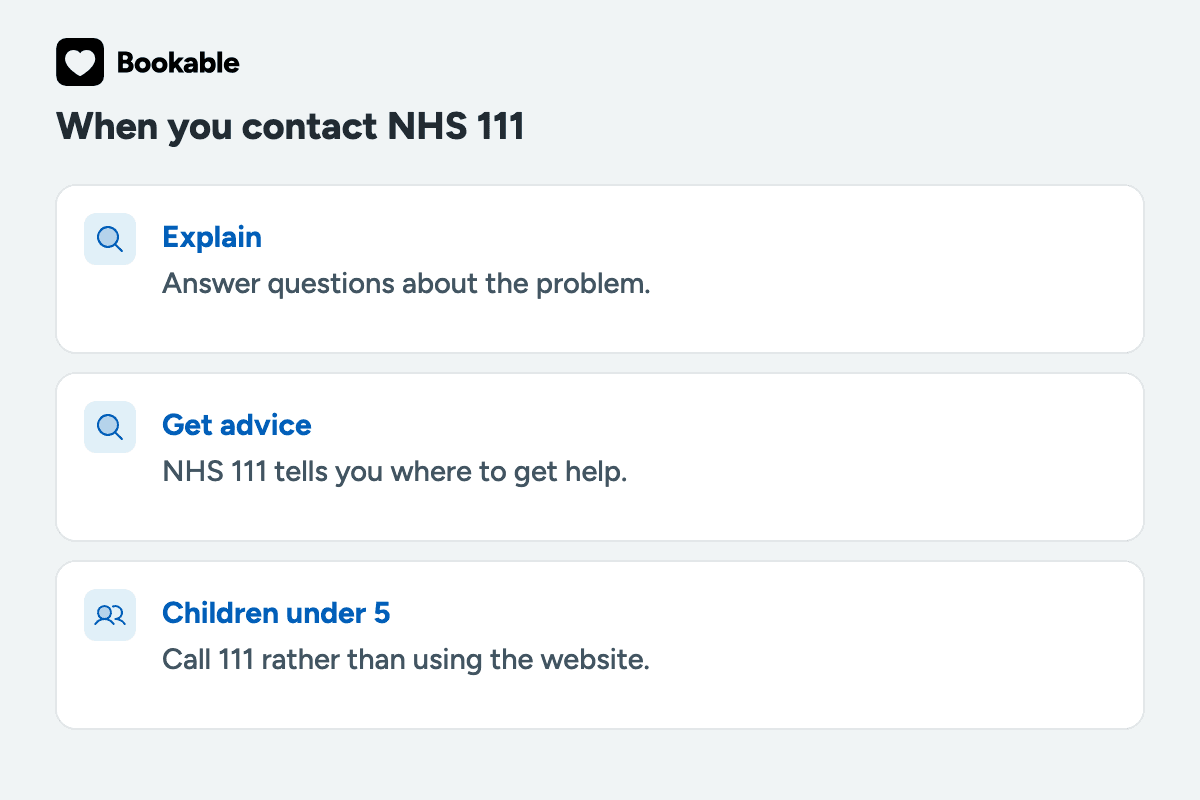
Use NHS 111 when you think you need medical help right now, or your GP surgery is not available. You can use NHS 111 online or call 111 (opens in a new tab). It asks about your symptoms and tells you where to go. That might be A&E, a UTC, an out-of-hours GP, a nurse callback, a pharmacist, your own GP surgery, or looking after yourself at home.
111 online is for people aged 5 and over. Call 111 instead if you:
- need help for a child under 5
- have complex problems caused by an existing medical condition
- have a care plan from your doctor for your current problem
- are receiving end-of-life care
This guide covers England. In Scotland use NHS 24 on 111, in Wales use NHS 111 Wales, and in Northern Ireland see nidirect.
Should I see a pharmacist or a GP?
Start with a pharmacy for common illnesses, aches and pains. Pharmacists can give advice and suggest medicines you can buy. Through Pharmacy First, they can also treat 7 common conditions, such as sore throat and urinary tract infections in women, without a GP appointment.
Contact your GP surgery for health problems that are not emergencies. If you need an urgent appointment, call your GP surgery. Read our guides on how to book a GP appointment and what to do if you can't get a GP appointment.
If you are not registered with a GP, the easiest way to find and register with an NHS GP surgery near you is Bookable. You can register online for free and book your first appointment at the same time.
Common questions
What if I am not sure whether it is an emergency?
Use NHS 111 online or call 111 and answer questions about the symptoms. 111 will tell you whether to call 999, go to A&E or get help somewhere else. If you think someone's life is at risk, call 999 straight away.
Can I go to an urgent treatment centre without an appointment?
You do not need to be registered with a GP to use one. Some urgent treatment centres let you book an appointment or arrival time through NHS 111, so they know you are coming. People who are most unwell, or who have an appointment, may be seen first.
Can NHS 111 get me an emergency supply of my medicine?
Yes. If you run out of a regular medicine, 111 online can send a request to a local pharmacy for a limited supply until you can get your repeat prescription.
Can I use 111 online for my baby?
No. 111 online is for people aged 5 and over. For a child under 5, call 111 to speak to someone. Call 999 if their life is at risk.
Do I need to bring anything to A&E or an urgent treatment centre?
Bring any medicines you take. You can ask for an interpreter at reception, including for British Sign Language. At an urgent treatment centre you do not need your NHS number.
Sources
- When to call 999 (opens in a new tab) (NHS)
- When to go to A&E (opens in a new tab) (NHS)
- When to go to an urgent treatment centre (UTC) (opens in a new tab) (NHS)
- When to use NHS 111 online or call 111 (opens in a new tab) (NHS)
- Appointments and bookings at your GP surgery (opens in a new tab) (NHS)
- Urgent treatment centres (opens in a new tab) (NHS England)